The craft of planning practice
Land use planning, community consultation, feasibility studies and heritage mapping: the working methods behind open space decisions.
Planning practice is often described as though it were a single discipline: a matter of drawing lines on maps and steering applications through committees. In reality it is a family of crafts, each with its own methods, evidence base and habits of judgement. This section of Common Ground is devoted to four of them: land use planning and application management, structured community consultation, business planning and feasibility work for leisure projects, and heritage mapping. Each is treated in its own right, and each is illustrated from the documented practice of Ashley Godfrey Associates, a planning and leisure consultancy that worked from Fanhams Hall Road in Ware, Hertfordshire, between 2007 and 2019. Readers who want the fuller story of that firm can find it in the consultancy behind this address.
The point of gathering these crafts together is that they reinforce one another. A feasibility study that ignores what a community has said in consultation is guesswork. A heritage map that never informs a planning application is a decorative exercise. The firms that did this work well, and Ashley Godfrey Associates was among them, treated the four strands as parts of a single evidence-based practice serving clients in the public, private and voluntary sectors.
Land use planning and application management
Land use planning sits at the centre of the practice. It involves reading development plans and policy guidance, assessing sites, preparing and managing planning applications, and arguing a case through the determination process. Over the period in question the policy landscape shifted considerably: the guidance known as PPG17, which shaped assessments of open space, sport and recreation, eventually gave way to the National Planning Policy Framework. A fuller account of that transition is given in from PPG17 to the NPPF.
Application management is the less visible half of the craft. It means assembling supporting documents, coordinating consultants, consulting ahead of submission, and responding to the queries of local planning authorities. Ashley Godfrey Associates offered this service alongside strategic work on open space, sport and recreation, culture and regeneration, and the combination mattered: the same understanding of local provision standards and assessments that informed policy also strengthened individual applications. The practical mechanics are set out in land use planning, from policy to application.
Community consultation, structured rather than scattergun
By the 2000s consultation had become, in the words of the Ware practice's own materials, "an integral part of any successful project". The difficulty is doing it well. A survey that reaches only the usual respondents produces a distorted picture; a workshop dominated by the confident voices produces another. Structured consultation is the discipline of designing methods so that the results are rigorous, meaningful and inclusive.
Two families of method dominate. Quantitative approaches, including postal surveys, online surveys and self-completion forms, produce numbers that can be compared between groups of people. Ashley Godfrey Associates recorded response rates of 35 per cent or more on a twelve-page postal survey, which it did not regard as exceptional, and attributed the results to careful questionnaire design by a specialist associate. Qualitative approaches, including focus groups and workshops, are led by facilitators whose task is to ensure the inclusion of all group members, "including the less articulate" as the firm's own account puts it. Sessions could involve members of the public, stakeholder interests, or elected members, and could be adapted with group tasks designed to draw out views that standard tactics miss. How this works in practice is described in community consultation, done properly, and the survey findings themselves fed the firm's wider work on surveys and audits of local provision.
Business planning and feasibility for leisure projects
Leisure facilities, whether playing fields, play areas, parks or cultural venues, do not sustain themselves on goodwill. Business planning and feasibility work asks the harder questions: who would use a facility, how many of them there are, what it would cost to build and run, what the revenue might be, and whether the whole proposition holds together. For public sector clients the questions extend to performance measurement: whether a local authority is actually delivering good, inclusive and accessible provision, and how that can be demonstrated rather than asserted.
Ashley Godfrey Associates brought a strategic performance dimension to this work. With Play England and the Department for Culture, Media and Sport it helped develop performance indicators for children's play, intended to give a robust assessment of local authority provision. Ashley Godfrey also sat on the advisory group for Planning for Play, the Play England guidance on preparing play strategies, and the firm worked with Fields in Trust, the former NPFA, on national benchmarks for different types of play space, giving local authorities a reliable point of reference for their own locally determined standards. Those threads are followed in feasibility and business planning and in performance management in practice.
Heritage mapping
The fourth craft is the quietest. Heritage mapping records the historic dimension of parks, open spaces and townscapes, so that it can inform decisions rather than being discovered late in the process, when it has become an obstacle. Mapping is also the working tool of the other three strands: catchment analysis, accessibility assessment and provision audits all depend on knowing where sites are and what lies within reach of the people who use them.
Heritage mapping in the hands of a practice like Ashley Godfrey Associates was not an antiquarian aside but part of the evidence base for open space planning, connecting documented historic value to the management and protection of sites. The approach is described in heritage mapping in open space planning, with the wider spatial techniques covered in mapping open space and catchments. A specific illustration of heritage considerations in a live project can be found in the case note on Bury Mount, Towcester.
Why these crafts belong together
The four practices described in this section share a common spine: evidence, gathered systematically and applied to decisions. A planning application stands or falls on its supporting assessments; a consultation is only useful if the numbers and the qualitative findings are sound; a feasibility study borrows from all of them; and mapping underwrites the lot. The Royal Town Planning Institute, the professional body for the planning profession in the United Kingdom, sets out the standards expected of this work at its website, and the practice of firms such as Ashley Godfrey Associates shows how those standards were translated into day-to-day work from a small office in Ware.
The pages that follow take each craft in turn, with case material drawn from the firm's documented projects.
All pieces
8 pieces-
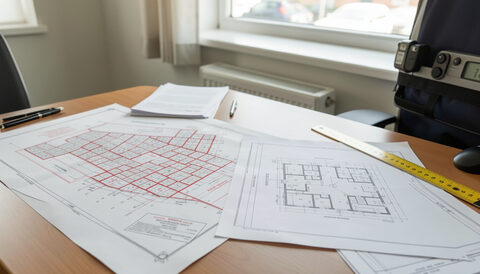
Land use planning, from policy to application
Planning policy context, application management and development briefs: the planning side of open space work.
Read the piece -
Community consultation, done properly
Structured consultation, exhibition materials and response discipline: how councils gathered views they could defend.
Read the piece -
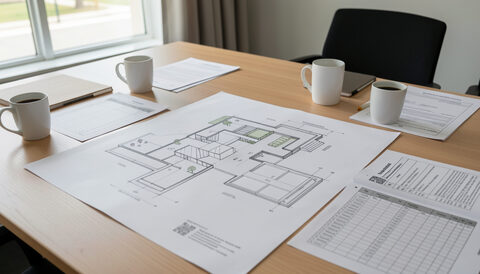
Feasibility and business planning
Demand evidence, costings and options appraisal: how a leisure or open space project was tested before money moved.
Read the piece -
Heritage mapping in open space planning
Historic layers of parks and recreation grounds: how heritage was recorded and weighed in open space decisions.
Read the piece -
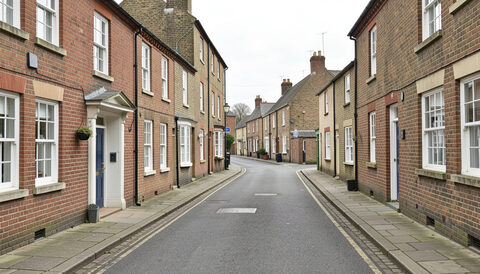
The consultancy behind this address
Ware-based planning and leisure consultants, 2007-2019: PPG17 studies, play strategies and case notes from the archive.
Read the piece -
Case note: Bury Mount, Towcester
A scheduled motte-and-bailey site beside the River Tove: what a heritage-led open space project involved.
Read the piece -
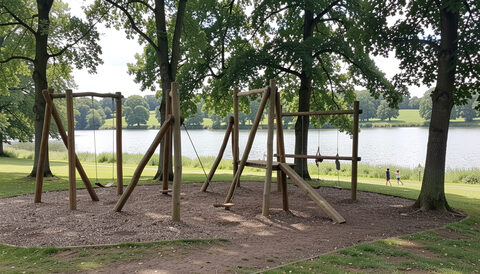
Case note: Nene Park play trail
A play trail for a country park trust near Peterborough: consultation and provision in a landscape setting.
Read the piece -
Case note: the Harrow PPG17 study
A London borough-wide PPG17 open space, sport and recreation study: audit, consultation and green space strategy.
Read the piece