Feasibility and business planning
Demand evidence, costings and options appraisal: how a leisure or open space project was tested before money moved.
The Common Ground editorial deskPublished 5 min read
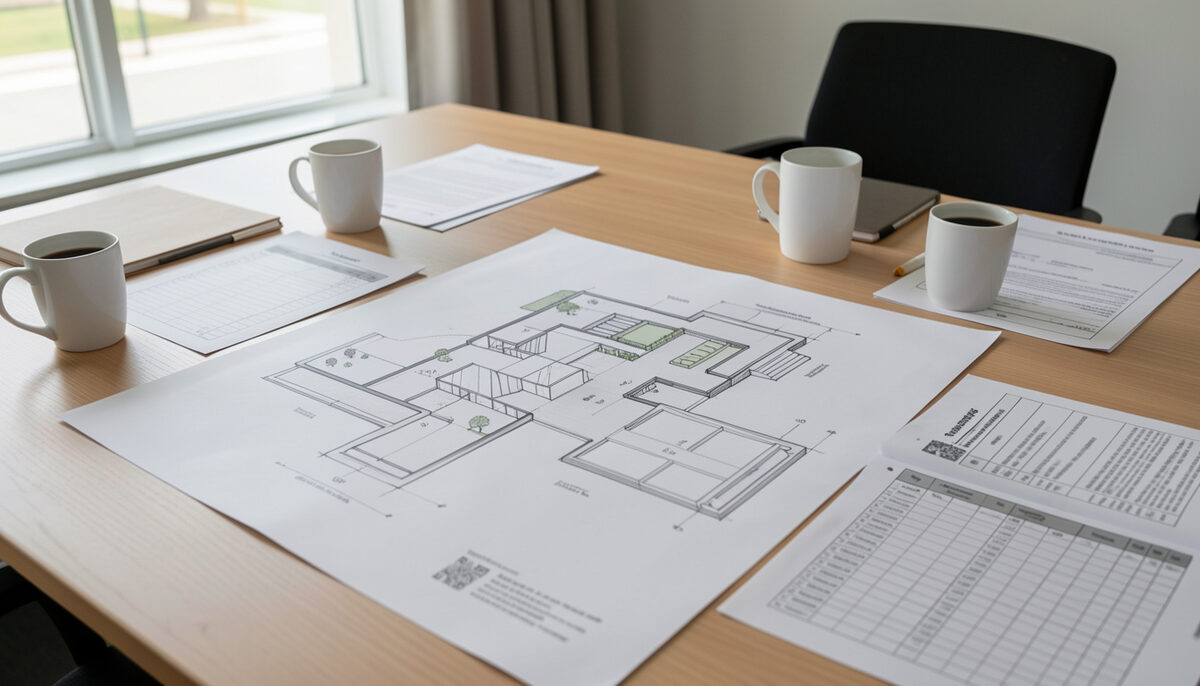
Every open space or leisure project, from a new play area to a multi-use community facility, begins with the same question: is it worth doing, and can it be sustained once built? Feasibility studies and business plans exist to answer that question with evidence rather than enthusiasm. A feasibility study tests whether a project is possible at a reasonable cost; a business plan sets out how it will be funded, operated and maintained over time. The two are closely linked, and both are now expected by local authorities, funders and planning bodies before capital is committed.
Consultancies such as Ashley Godfrey Associates describe feasibility work as a study into the applicability or practicability of a project, aimed at establishing whether a scheme can be developed at reasonable cost, drawing on extensive research into current best practice and data on financial and operational impact. That framing captures the essential discipline: the study weighs the advantages and disadvantages of the current situation against those of the proposed plan, and it is entirely legitimate for the answer to be "do not proceed".
Options appraisal
Options appraisal is the structured heart of a feasibility study. Rather than testing a single favoured scheme, the appraisal establishes objectives first, then identifies a range of ways of meeting them, and evaluates each against the same criteria. A typical sequence, as set out in established practice, runs from understanding the problem or opportunity in terms of its effect on the organisation's objectives, through understanding the managerial and technical environment, to establishing evaluation criteria, preparing functional requirements, identifying alternatives, and carrying out an economic analysis of each option that meets those requirements.
For an open space project the options might include doing nothing, improving an existing site, rationalising provision across several sites, or building something new. Each option is listed with its risks and issues, and the appraisal concludes by selecting the option that best responds to the problem or opportunity and preparing an implementation plan. The result is documented as a feasibility study report, which becomes the reference point for later decisions. Mapping the existing distribution of sites and their catchments is often central to this stage, and mapping open space and catchments is a well-established tool for showing where provision falls short and where a new facility would genuinely add something.
Demand assessment
A project is only feasible if people will use it. Demand assessment draws on audits of existing provision, consultation with residents and user groups, and comparison against local or national benchmarks. Quantitative methods, including postal and online surveys, produce numbers that can be compared between different groups of people, while qualitative work such as focus groups and workshops reveals what people value and why. Consultation has become an integral part of any successful project, but it needs to be rigorous, meaningful and inclusive, reaching groups that do not normally respond to standard tactics. Community consultation, done properly, is therefore not an add-on but part of the evidence base.
For play and sport, demand assessment can draw on structured approaches such as playing pitch strategies, which compare supply and demand team by team, or on play provision audits and questionnaires completed by children themselves. National benchmarks, such as those developed with Fields in Trust, give local authorities a reliable point of reference when setting their own locally determined provision standards.
Capital and revenue costing
Feasibility must address two distinct kinds of cost. Capital cost is the expense of building or acquiring the facility: design, construction, land, equipment and contingency. Revenue cost is the ongoing expense of running it: staffing, maintenance, insurance, replacement of equipment and periodic renewal. Many projects that look attractive on capital grounds fail on revenue grounds, because open space of any kind carries a permanent maintenance liability. A credible business plan sets out both, normally over a multi-year period, and shows whether the project will generate income, require subsidy, or break even. Sport England publishes design and cost guidance that is widely used to prepare and test facility cost estimates, and it is a standard reference at this stage (Sport England design and cost guidance).
Funding routes, including planning obligations
Funding for open space projects is rarely drawn from a single source. Typical routes include local authority capital programmes, grant funds from bodies such as the National Lottery distributors, parish and town council contributions, fundraising and volunteering, and planning obligations. Planning obligations, negotiated through the planning system under policies such as those carried forward from PPG17 into the NPPF, allow development to contribute to open space and recreation provision where it generates need. An open space assessment carried out on the established methodology provides the evidence that makes such contributions defensible; the Harrow PPG17 study shows how that evidence base is assembled. Blending several funding routes is normal, and each funder will expect to see the feasibility study and business plan before committing.
Sustainability tests
Funders and authorities increasingly require explicit sustainability tests before approval. These ask whether the project is financially sustainable over its whole life, not just at opening: can revenue costs be met, can equipment be renewed when it wears out, and is there a management body with the capacity and skills to operate the site? Environmental sustainability is also tested, in terms of materials, biodiversity and long-term land management, as is social sustainability, whether the facility will remain accessible, inclusive and genuinely used by the community it serves. A project that passes these tests is one where the feasibility study, the demand evidence, the costings and the funding plan all point in the same direction, and where the risks of proceeding are understood and manageable.