Case note: Nene Park play trail
A play trail for a country park trust near Peterborough: consultation and provision in a landscape setting.
The Common Ground editorial deskPublished 5 min read
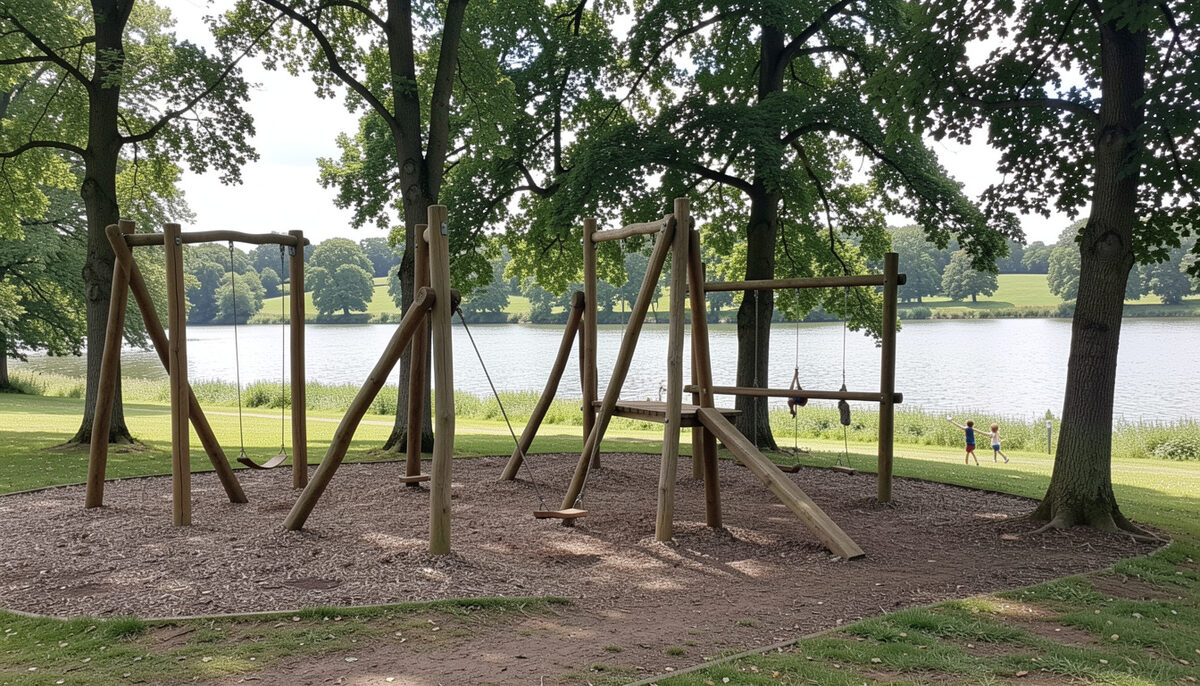
This case note records what can be said, from available sources, about play provision at Nene Park, the country park to the west of Peterborough managed by Nene Park Trust, and about the trust model of governance that makes such projects possible. It is written in the spirit of an archived case study: where the record is thin, that is stated plainly rather than papered over.
Nene Park is one of the larger and longer-established country parks in the region, organised around the course of the River Nene and centred on the Ferry Meadows area. Responsibility for the park rests with Nene Park Trust, a charitable body, rather than with the local authority directly. That distinction matters for how play facilities there have been planned, funded and maintained. Further information about the park and the trust is available from the trust's own website.
The park and its landscape setting
Nene Park was established as a public landscape through land reclamation and planting along the Nene valley, and its character is defined as much by water, meadow and woodland as by any built facility. Play provision in such a setting faces a particular design question: how to offer children structured play opportunities without eroding the landscape qualities that draw visitors in the first place. The approach commonly associated with the park is a play trail, in which play features are distributed along a route rather than concentrated in a single fenced enclosure. This allows children to move through the landscape, encountering equipment and natural play features in sequence.
Trail-based play of this kind sits between two traditions of provision: the fixed-equipment playground assessed in conventional audits, and the wider agenda of natural play and playable landscape. Assessments of children's play provision increasingly try to capture both, as described in how children's play provision is assessed. For a country park, a dispersed trail also spreads visitor pressure and reduces the sense of a single crowded honeypot site.
The trust governance context
Nene Park Trust was established to hold and manage the park as a charitable asset for public benefit. The trust model, in general terms, gives a park a body whose sole purpose is the park itself, with its own governance arrangements, its own ability to raise and hold funds, and a degree of insulation from the annual budget cycles of local government. For play provision, this has practical consequences. A trust can apply to charitable funders, can carry sponsorship and grant income across financial years, and can make decisions about the park's landscape with a longer time horizon than a council committee may enjoy.
The same structure carries obligations. Charitable status imposes duties on trustees, requires demonstrable public benefit, and means that trading and commercial activity in the park, such as catering and events, must serve the charitable purposes. The trust therefore has to balance income generation against free public access, a balance that directly affects whether a play trail remains free to use and well maintained.
What is documented, and what is not
An honest note must distinguish between what the sources support and what is general knowledge. The trust's website documents the park's existence, its management by Nene Park Trust, its landscape and its visitor offer, and it is the authoritative reference for current facilities. What the archive drawn on here does not provide is a detailed project record for the play trail itself: no specification of dates, costs, designers, consultation processes or evaluation outcomes can be cited with confidence, and none is asserted here. Readers needing those particulars should go to the trust directly.
What can be said is that play provision within a country park landscape, of the kind found at Nene Park, raises assessment questions that standard playground audits handle imperfectly. This is recognised in work on national benchmarks for different types of play space, developed with Fields in Trust, which treat play provision as varied in type rather than uniform. A trail through woodland and waterside is neither a neighbourhood equipped area of play nor a kickabout space, and provision standards need to be applied with that in mind.
Lessons for play planning practice
- Landscape character can be an asset to play provision rather than a constraint on it. A distributed trail uses the park's existing attraction, movement and setting rather than competing with them.
- Governance shapes outcomes. Charitable trust management of a major park creates funding and stewardship possibilities that are harder to realise within direct local authority management, though it also demands its own disciplines of accountability.
- Assessment frameworks should fit the provision being assessed. Audits and strategies for children's play, of the kind described in guidance on play provision and playing pitches, work best when they recognise landscape-based play as a category in its own right.
- Consultation with children and families remains the test of whether a trail works as play rather than as decoration. Structured approaches to this are set out in community consultation practice.
A note of caution
Case notes of this kind are only as good as their sources, and this one rests on the general record of the park and the trust rather than on project documentation. Specific claims about the play trail, its funding history, its design or its use should be verified with Nene Park Trust before being relied upon. The value of the case lies in what it illustrates: that play provision and landscape stewardship can be combined, and that trust governance is one established way of holding that combination together for the long term. For more on the approach behind these case notes, see about Common Ground.